Individualization
After the primordial contraction and the first emanations, after light met boundary and harmony gave way to fracture, something extraordinary became possible: individualization — the birth of the Many from the One.
This is not creation “from outside” or “from nothing,” but differentiation from within the Infinite. It is the moment in which the undivided Light becomes countless unique rays, each carrying a particular tone, color, rhythm, and destiny. It is the origin of souls — not as bodies, not as personalities, but as singular windows through which the Infinite perceives itself.
Individualization is the moment God becomes many without ever ceasing to be One.
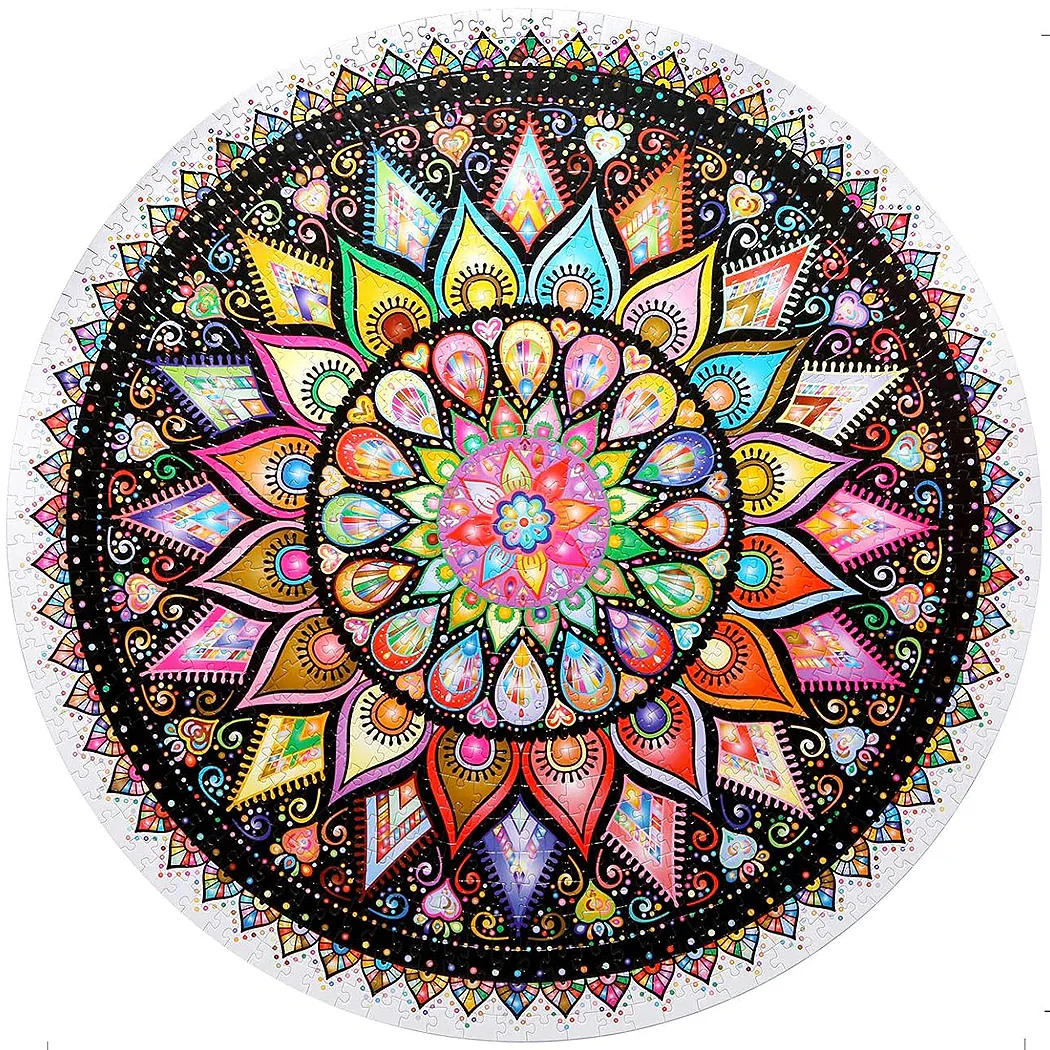
To understand this process, we must leave behind linear metaphors and turn to something more profound: the Mandala.
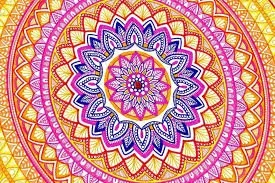
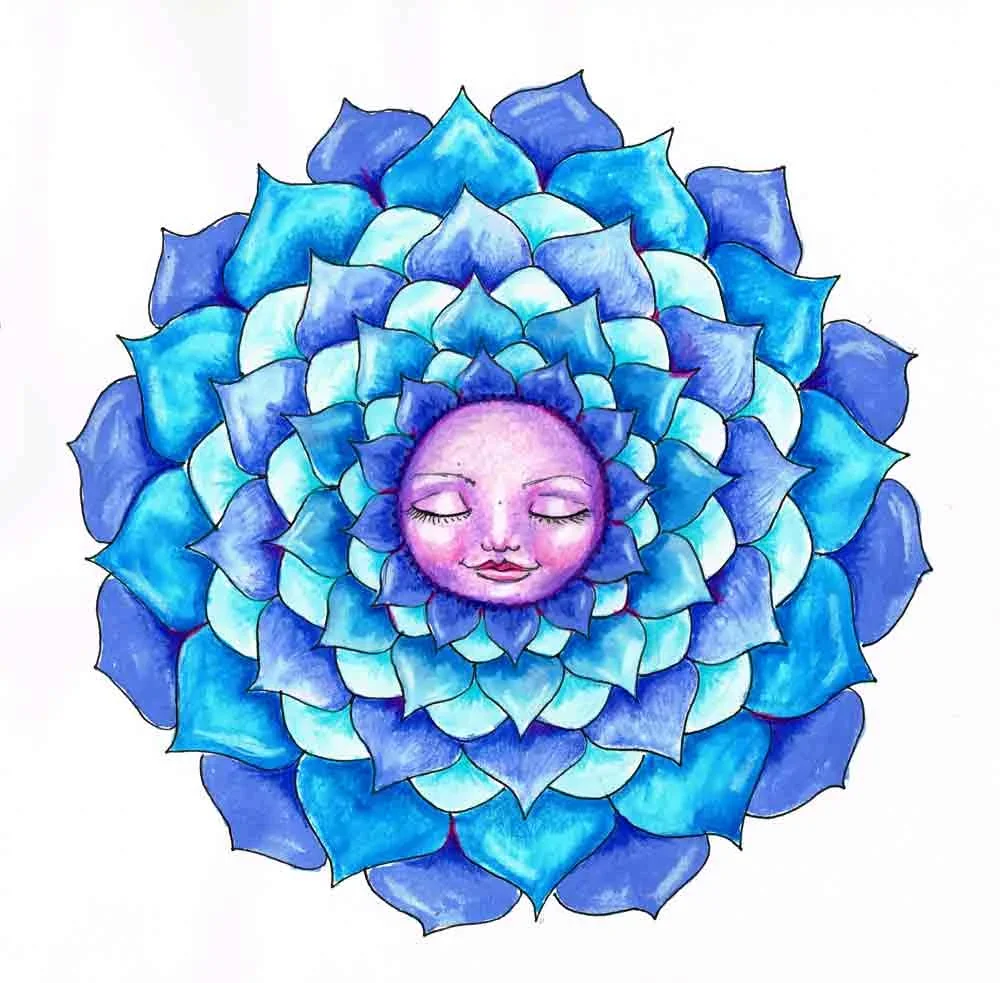
Imagine God as a perfect mandala — not a drawing, but an infinite living geometry. Its center is the Absolute: silent, pure, formless, indivisible. Its rings, layers, and outward expansions represent lower levels of emanation, each slightly less transparent to the Infinite Light than the one before it.
At the very center, there is no separation at all.
Only the One.
Only the Pure Light.
Only the Eternal Flame that knows itself without reflection.
But as the emanations ripple outward from this divine center, like concentric worlds in a cosmic mandala, something changes. Distinction begins. Colors begin. Patterns begin. The Light starts to refract into forms, ideas, archetypes, potential beings. And at last, at the farthest edges of the mandala — the vast outer ring — that Light becomes so differentiated, so refracted, that it seems to have broken into a multitude of separate points.
This is us.
Human souls exist at the outermost circles of the mandala — the periphery where the illusion of separation is strongest. Not because we are degraded or abandoned, but because individuality requires distance. A soul too close to the center cannot perceive itself as “I,” for in the center, everything is One.
Thus:
At the center: no individuality
In the inner rings: archetypes, angels, unified beings
In the middle worlds: souls in formation
At the outer ring: souls fully individualized, experiencing separation, identity, choice
The closer the emanation is to the center, the more it remembers its unity with the Source.
The farther it moves toward the circumference, the more it experiences itself as distinct.
This is the mandala of God — a living model of the One becoming the Many.
After the Shevirah, the primordial shattering, the Infinite Light did not vanish. It dispersed. It refracted. It entered vessels, forms, worlds, and dimensions like sunlight passing through layers of crystal.
Each layer refracted the Light differently.
Each fracture created a unique angle of perception.
Each spark took on a distinct identity.
What we call “a soul” is one of these sparks — a single ray of infinite light, shaped by the angle through which it passed.
This is important:
A soul is not a fragment of God.
A soul is God, seen through a narrow keyhole.
The Infinite cannot be broken, only experienced from different vantage points.
The moment of individualization is the moment each ray acquires:
its own temperament
its own “frequency”
its own resonance
its own relationship to the Source
its own mission or path
its own memories from the higher worlds
its own degree of awareness
No two rays are identical, because each passed through a slightly different angle, color, or vessel. This is why human souls are so uniquely distinct in their desires, abilities, wounds, strengths, and destinies.
The many are not illusions — the separation is.
The differences are real — the division is not.
Individualization allows God to experience infinity from infinite viewpoints.
A perfect example of individualization can be seen in the experiments with photons passing through multiple slits. When a beam of identical photons is sent toward a barrier with several openings, each photon chooses a path. Nothing physically forces one to take the left slit, another the right, or another both paths at once in a superposition. Yet when they reach the screen, the photons create different interference patterns, complex and unique, depending on the number of openings and the angles they pass through.
The photons are identical at their source — pure energy, indistinguishable in every measurable way.
But after passing through different paths, they become unique expressions, each carrying a distinct imprint of the route it traveled.
This is a perfect mirror of the soul’s journey:
The Divine Light is one.
But as it travels through multiple vessels, worlds, and angles of emanation, it refracts into countless individualized rays.
Not because the Light changes —
but because the path changes the expression.
Each soul becomes the pattern created by the route it passed through.
In Gnostic traditions, this differentiation is symbolized through the story of Sophia — the divine spark who, in her longing to behold the Infinite directly, descends too far into emanated worlds and becomes fragmented, scattering divine sparks into the lower realms.
Sophia is the archetype of the soul that remembers the center of the mandala, even while finding itself at the edges. Her story mirrors the cosmic condition of individualization:
The Light descends
It becomes differentiated
It becomes scattered
It forgets its origin
It longs for return
Sophia is not separate from the Source, but she feels separate — and that feeling is the essence of individuality.
The scattered sparks that fall with her become the roots of human souls. Each carries a memory of the Center, a yearning for wholeness, even while living as a discrete point on the outer rim.
Thus, in the process of individualization, every soul becomes a miniature Sophia — a being who is both fallen and divine, fragmented yet whole, distant yet inseparably connected to the Infinite.
Although the mandala seems to place us “far” from the Source, this distance is not spatial.
It is perceptual.
Nothing can be distant from the Infinite, because the Infinite exists within everything.
Yet the outer rings experience the Light dimly — not because the Light is weaker, but because the vessels here are more constricted, more opaque, more focused on form.
So we feel:
separate
alone
isolated inside a body
trapped in time
bound by ego
cut off from the divine
These sensations are necessary for individuality.
Without them, “you” would not be “you.”
There would only be the One.
Thus individuality is both a necessity and a veil.
The mandala illustrates this perfectly: from the outer ring, you cannot see that all lines converge at the center. The distance feels real because perception is limited. Yet the entire mandala is one single pattern, one single unity, one single organism.
The separation between beings is like the separation between the colors of a rainbow — distinct to the eye, inseparable in reality.
Individualization is not a fall from grace.
It is an exploration.
Each soul is a mirror placed at a different angle in the mandala so that the Infinite can behold itself from another perspective.
Each human being becomes:
a unique question
a unique answer
a unique angle of divine truth
a unique flavor of consciousness
If God had remained One without multiplicity, He would remain unknowable even to Himself. By becoming many, He creates the conditions for:
experience
relationship
contrast
discovery
drama
evolution
the unfolding of worlds
Through individual souls, God explores infinity from within.
We are the eyes through which the Infinite sees infinity.
To fully experience individuality, a soul must forget its origin.
Not permanently — only for the duration of its journey.
The forgetfulness is not a punishment.
It is the necessary condition for freedom.
If a soul remembered its absolute unity at all times, it would have no reason to grow, no reason to choose, no reason to evolve. Individuality requires:
forgetting the center
believing in the periphery
feeling separate
acting from “I”
This is why incarnation feels so heavy — because the soul must operate through a vessel thick enough to block the direct awareness of the One.
We stand at the edges of the mandala not because we have fallen — but because the edges are where individuality becomes possible.